The Sanguinarian

The Sanguinarian
Showing posts with label review. Show all posts

Wednesday, 4 January 2017

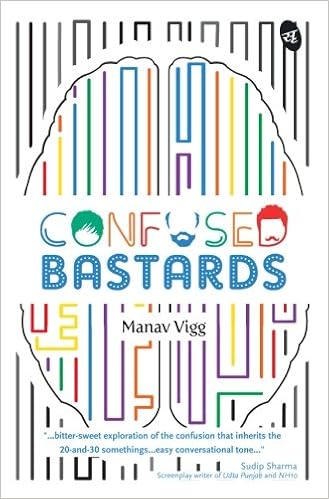
Review- Confused Bastards


Blurb: What happens when three entrepreneurs initiate a start-up which shocks the nation? 
Aakash, Jai and Vivek are mostly usual in their ways, except for some. Struggling with their own inner conflicts as well as the cruel world outside, they decide to show the world their true potential. To make it big. But how? They become the voice of the nation by starting up an online platform where people can upload unabashed, unapologetic videos, venting out their angst against people, politics, bosses, lovers, taboos, or just about anything. Even the founders themselves. 
The platform spreads like wild fire. But when has fire doused without burning a few! 
Confused Bastards is not just a witty, gritty, fast-paced journey of three friends, it’s also an intolerant story for a tolerant country! 


Silently take a bow out the door, Chetan Baba. Because here is the proof that new writing coming from young authors in India is not your hackneyed IIT jao- ladki patao-sex karo-BC karo plot. 

Confused Bastards is refreshingly funny, non-preachy and very, very real. 

Throughout the story of Aakash, Jai and Vivek, their trials and tribulations, failures and successes, flaws and qualities, I was constantly giggling and laughing. 

When you stop looking at the IITians and IIMians, it's guys like these three which form the real youth of the country. The varying, undulating tapestry of the latent and overt aspirations and opinions of India's youth is made of the thoughts and aspirations nursed by Aakash, Jai and Vivek. 

Aakash, who has many good ideas, each a subsequent failure. And he has a rich father who constantly berates him. He's also a raving misogynist who believes in bang-bang-boom without batting an eyelid or worrying about committed attachments; even describing every sexual conquest in terms of the Kamasutra.

Jai has a boss who's a monster, sets impossible goals for his employees and works them like cattle on a farm. Jai wants to quit his job, but lacks the confidence to take such a risk, owing to pressure from his parents and their sacrifices for their áverage' son. I loved his track with Sneha, the woman he later falls in love with. 

Vivek has a failed marriage and is filled with control issues. Being a topper since childhood, he cannot tolerate failing at something. And has an equally funny but irritating habit of worshiping all Gods. 

They launch this website, as a start-up, where people with any sort of grudge can vent their spleen. The story is dedicated to a detailed portrayal of how the boys go about getting angel investors and then setting up the company. And then the stories and people they encounter in course of getting good videos. 

The way the corporate world ditches you at the slightest hint of trouble has also been portrayed very well. It's about how the boys make some wrong decisions, even spend a few nights in jail, and lose everything all over again. Then they fight their personal demons, overcome their problems with their own families and thought processes and find their way in life again.
The conflict and characterization has been played out well. I liked all the lead characters and the supporting ones too.

The editing is excellent, and the prose quality is high. The author has command on the language and grammar, and the storytelling as well. The plot is original and the style is ingenious. 

I cannot find anything to criticize in the book, except perhaps Aakash gets a little too obnoxious in his misogyny at times. 

Read Confused Bastards for a refreshingly honest and fun take on the new aspirations of the millenial youth in India: Confused Bastards

Review- Pishacha- Neil D'Silva

Pishacha: A tale of love beyond births by [D'Silva, Neil]

On the outside, he is a Pishacha – a terrifying demon compelled to eat human flesh to survive. Yet, inside, he has a tender heart that still pines for the lover of his previous human birth.

More than a century later, when he discovers that his lover has been reborn in a rich Mumbai household, and is now a beautiful woman, his heart begins to beat again with a happy rhythm.

There are monumental obstacles in his path though, the least of which is the fact that she loves another man. But, the biggest challenge is that she is human and he is demon.

To make her his, he will have to become human again; and to accomplish that, he will have to fight holy men and witch-mothers and giants, and challenge the gods themselves.

From the best-selling author of Maya’s New Husband, comes a tragic tale of forbidden love — Pishacha. 


Horror thrillers written in India rarely push the boundaries of storytelling, ideas of what constitutes horror, and language and prose style. 

Pishacha by Neil D'Silva is one of the happy exceptions. 

This is a compelling, hypnotizing novel that I finished in a single sitting! I was up the entire night, reading this. And I was spooked enough to look at the ceiling every few minutes for a black, amorphous shape sneaking towards me... 

Pishacha mashes genres very well- supernatural horror, suspense, erotica, and even a little bit of historical fiction is woven into the story very well. 

Neetika is a college student being chased by this presence she feels is continuously watching her, spying on her and chasing her everywhere she goes. She's in a relationship with Yug, a dashing, dapper guy who seems to be the perfect boyfriend- handsome, caring, intelligent and successful, and one whom her father too approves of. He even proposes marriage and she is about to agree...when a weird series of events rudely interrupt their union. 

Followed by weirder incidents in Goa, where Neetika takes a trip with her friends post exams. And then uncovering the secrets behind the life and death of her mother, who left her at childbirth. Plus the sudden appearance of a young man who buys a house from Neetika's Dad and sleeps with a strange woman called Malini. 

And then there is Pishacha himself. The story of his entry in the realm of Earth and the world of humans is as exciting as the journey he undertakes across India to obtain his love. 

This is where Pishacha scores- giving the bad guy a background, and the strong, redeeming emotion of love in his heart. The reason for which he comes back from some far off corner of the universe to find his love, Neetika. He wants to become a human to obtain her, and for that he will fight anyone- witches, holy sages etc. 

When Neetika goes off to investigate the mystery of her mother's death and the mystery behind her own visions, followed by Yug, and comes face to face with the Pishacha,does the mystery unfold in a shocking, nail biting climax. 

The gore scenes are done well. The sex is only as much as needed. The suspense behind the intertwined histories of all lead characters has been done nicely. 

Conflict is fleshed out well, and characterization is good. 

The plot is original and the pace is heady, keeping the reader hooked at every chapter ending and every twist in the tale. The quality of prose is high, grammar and punctuation is perfect and the style is very ingenious. 

Only nitpick I could find is that the language, in places, is a bit dated. But it doesn't take away from the story in anyway. 


Pishacha is a step up on Neil's bestselling debut Maya's New Husband. 

I'd say pick this one up for an exciting, nail biting experience if you dig supernatural horror, original storytelling, Stephen King and well written books. 

Pishacha

Tuesday, 6 December 2016

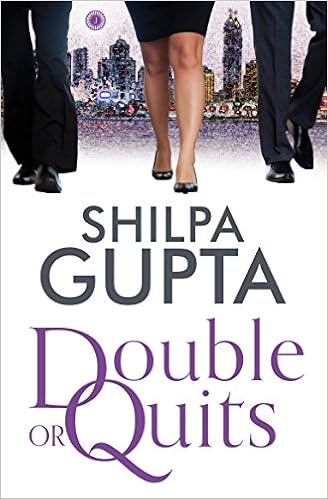
Review- Double or Quits-Shilpa Gupta


Blurb: Racy, realistic and fast paced, Double or Quits traces Jyotsna Singh’s story against the backdrop of the treacherous stock markets. Losing her father at the age of 12 and brought up under frugal circumstances, Jyotsna grows up too soon. Nervy and edgy by nature, she morphs into a confident and charming young woman with a successful career in Investment Banking. Enter Aryan Sahani, rising corporate star and billionaire who wraps Jyotsna in his charms, but has plans of his own. Driven by her loyalty to the firm, a desire to break out of her lower middle class moorings and misplaced love, Jyotsna overreaches. She is soon faced with the dark side of the stock markets – a world where ambition, greed and fear rule and reputations are lost a lot faster than they are built. Will Jyotsna be able to resurrect her life? Will she find the true love she has been craving? Double or Quits is a tale of love, betrayal and courage. It is a tale about falling down, but not staying down. 


There are some books which WOW you from the moment you read the first few pages to when you have read the last page and closed the book. There are some books you enjoy reading, and then forget about within days. There are some books that disappoint you within the first few pages and you're like, I'm closing it and relegating it to the trash right now. 

Double or Quits falls on the better side of the spectrum. 

I wanted to read this book. Despite a lot of things which went wrong in the execution, I wanted to read the book and was eager to finish it. And I did. 
This is one of those books which gets some things right and some wrong. 

To begin with, Double or Quits is a story with great potential but faulty execution. 

The things this novel, set in the cut-throat corporate world, gets right: 
1. I liked Jyotsna a lot. She's my kinda gal- smart, strong, independent, tough and a go-getter. She's secure enough in her own worth as a person and doesn't need a man to validate her; but at the same time she knows how to appreciate genuine admiration when it comes her way. I also liked that she's liberated and puts her career first; and isn't a pushover whom society and family can manipulate into submission. 
2. I liked Jyo's broadminded mother and Grandma. Amazing women- what wouldn't one give to have such supportive, understanding and liberal parent and grandparent! 
3. I like the profusion of good food in this book. 
4. I loved Nitin's character too. He's my kinda male feminist. The way he stands with Jyo through the most difficult phases of her life is amazing. And of course, he's well rounded as a person- smart, driven, intelligent, successful and good looking.
5. I liked how Jyo, despite being in a situation where she had to bear punishment for mistakes she didn't make, makes the most of it, works her way through and comes through with flying colors. This is good characterization- putting your character through the meat grinder, testing their resilience and then making them rise from the ashes like a phoenix. 
6. The corporate world has been explained very well. I'm a scientist by profession, and have little or no idea of corporate world or terms, but Shilpa, having more than a decade's experience in Investment Banking herself, breaks down the world of major corporations for us, nicely depicting the high stakes, the politics and backstabbing and the adrenaline rush. It made it easier to understand the story. 
7. The plot is original and the story line is new and refreshing. No romantic nonsense. The suspense has been maintained well throughout. 
8. Aryan's character, as well as those of the other supporting characters, have been etched well.
9. I liked Sanchita and Richa's characters- supportive girlfriends women like Jyo need for much needed encouragement and support- and the equation of trust, love and bonhomie the three women share.

Now let me come to what this novel gets wrong: 

1. More telling and very less showing. This makes it difficult to visualize the scenes properly, or immerse myself completely in the story. There is narration instead of proper scenes. I mean I know that  the protagonists are having dinner or making love or engaged in a high-power corporate meeting, but there is no context, no emotional intelligence in the scene. The author, instead of zooming in on the scenes to help us connect with the story, has rather skimmed through, jumping from one scene to another within the same chapter and giving us only a glimpse. I wanted a lot of scenes.
2. The language fails to move me. Some stray lines and phrases stand out in brilliance, but otherwise the prose is clunky and refuses to flow. It's not that the language is pedestrian, or I was expecting a very high level of English. But it could still have been better- more taut and crisp. There are no grammatical mistakes as such, but still, something was missing here. 
3. The start could have been better. When I start reading something I want to see something major happening, something which already makes me apprehensive about what will happen next. That was missing here. For example, the build up could have been in a way that the protagonist has a presentation whose outcome is important for her, and she's apprehensive about how it will go. 
4. Jyotsna's character does things very anachronistic to her personality, at times. Why does she go out on a  date with Aryan the same evening he humiliates her in front of her colleagues? Why does she trust him so blindly with regard to business when she only has an affair with him? And Aryan keeps repeatedly insulting her and she still keeps going out with him. He continues to be evasive and secretive and she blindly continues to trust him. She goes on a vacation to Malaysia with him when they've barely started dating, and even sleeps with him without first knowing him well. All these are at sharp odds with her high self-esteem, cautious nature and low threshold for sexist crap. Why would she tolerate a sexist who constantly subjects her to gaslighting? I mean we all do stuff which is out of character, but this is just not done. 
5. Does anyone say 'Gosh' much these days? 
6. At places the author goes too overboard with corporate jargon. Now I understand that being a corporate woman herself, she has the instinct to talk in terms of Investment Banking and such. But that is where authors who create stories set in the world they themselves inhabit should be careful- to use enough technical terms to paint a credible picture of the character's profession, but not go overboard so non-corporate people find it boring. 


All in all, I praise Double and Quits for its maturity, originality of content, and that it doesn't waste time with over-the-top romantic drama. This book has a lot of important things to say, and at places it does that very well. At other places, though, it could have been written better. The author can do so much better- she shows promise and potential.

But I would still like to applaud this novel for making a difference, and for encapsulating the messages of women's emancipation that it does. 

And I wish Shilpa all the best for her next book.
Double or Quits

Give this book a try, I'd say. You can buy a copy here: 


Friday, 21 October 2016

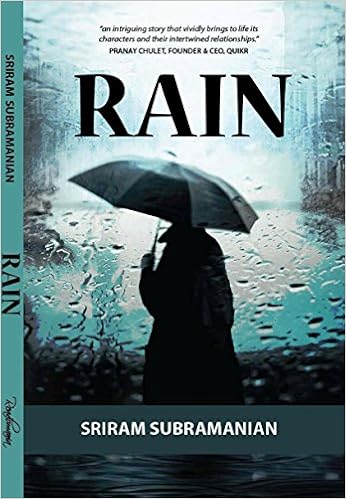
Review- Rain- Sriram Subramanian


Blurb: Architect Jai Dubey trusts in reason - not for him the faith and prayer so firmly ingrained in his fellow countrymen. When fortune deserts Jai and his carefully ordered life spins inexorably out of control, Jai stands on the brink of ruin. Only a delayed monsoon can save Jai’s biggest project from disaster, but there are millions across the land praying for the exact opposite. 
Reason seems to have its limits - the weather defies all prediction, let alone control. 
Will Jai relinquish the beliefs of a lifetime? Will he reconcile with the awful ambiguity about his past? Will he be able to save his crumbling marriage? 

Before I proceed to critique the book, let me provide some context. The day I started reading the book on my smartphone, we were moving from Goregaon to Kandivali. The entire day went buy in getting stuff packed and moved- you can imagine the chaos. And yet in the middle of this chaos, I finished to read the entire book in a day! All 200 pages of it were done by the time I went to sleep. I was helping my mother with the movers, and then reading in breaks. The book was so interesting I couldn't put it down. 

This is the story of Jai Dubey and his 'different' ideals- how he has his own construction company, a small entity working for small time businesses and staying afloat. Jai is very particular about sticking to his guns- he won't work for many clients at a time so he can give each project his best instead of taking on numerous projects and doing most half-baked. He knows he could make more money with more clients but quality matters more to him. He loves his wife who has a job of her own, and supports her career. He puts up with his shrill, nasty mother-in-law and brother-in-law Ashok who's a wily politician, jams with his scientist father-in-law and takes care of his employees and friend-cum-business partner. He's an atheist who doesn't fall for the religious mumbo jumbo of his Marathi in-laws. 
I found Jai quite relatable because I found a little of myself in him- independent, rational and solid personal principles.


All this falls flat when his mother in law challenges him to build a proper home for her daughter and not make her live in a rented apartment. Jai goes on to make some major choices...unusual ones that cost him  a lot- his friend and business partner Ravi, his business, and most of all threatens to tear apart his marriage. At the same time he's dealing with demons from his horrible past, most of which he has blocked out and is trying to recover. Then he makes some really drastic decisions and they change the way he looks at life itself. 

The characters are all well fleshed out, but the best is Jai's. His ideals and how they come in conflict with his situation, how he changes his way of thinking overtime, how he fails to make the right choices at the right time...Jai is endearing in his fallibility, his self-doubt, his making poor choices. 

There was also a constant thread of suspense in the book, all created by Jai's actions. What will he do next, and where will his choices take the plot? 

Sriram writes extremely well- the prose is of high quality and he doesn't let up once in language and grammar. The editing is excellent and his skill as a wordsmith shows in the fact that he has managed to write evocatively without using one big word throughout. That's true craftsmanship. That stuff takes practice- reading a lot, writing a lot and then getting your writing critiqued by neutral parties who will give an unbiased review. 

I was a little eager to get through the philosophical parts, and some of Jai's actions are really weird. Enumerating those would mean providing spoilers so I won't talk about them. But needless to say the bumps are few and don't affect on the overall appeal of the story.

Sriram has obviously been through the proper whetting process and come out shining. In a scenario where people who have never picked up a novel in their life before are venturing to write books and become bestselling authors, and where authors deliberately dumb down language, grammar and content to appeal to the mass market, Sriram is a noteworthy exception. In refusing to compromise on quality, he has shown his mettle, his integrity as an author who respects his craft and whose work will endure the ravages of time. 

RAIN is a touching story of a man confused in his ideals, fighting his personal demons, and coming out victorious. This book checks all the criteria for quality literature. Go buy your book and encourage authors like Sriram: RAIN


Friday, 15 July 2016

Review- Two 'Unfinishable' Books


As much as I tried, I could not ring myself to finish the both of these books. Maybe my reading preferences, preconceived notions about both literature and society, and my penchant for well written books with stories that make sense is responsible.

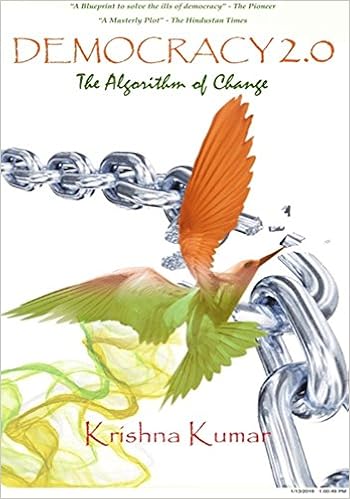
My different educational and social background from the author maybe the reason I couldn't read Democracy 2.0. There's no real story, no characterization, no plot, no agency, no goals, no direction to the tale. The novel's blurb suggests it is about a revolution but it peddles and perpetuates all cliches in the Indian educational system. It repeats the same old rhetoric about MBBS/Engineering and then IAS- the path most students take when they don't go down the B.Tech-MBA way. The book blatantly ignores other unexplored fields like pharmacy, journalism, literature etc. as a revolution for young people for career choices- that's how India's actually going to rehaul it's socio-educational structure and the nation can think of developing. There are also cliches regarding women and how they should live and behave. The book perpetuates a patriarchal domination of public spaces and discourses in the Indian milieu. Some revolution.
Like I said, my different educational and social background from the author maybe why the book didn't click with me. The author should seriously read some actual books and learn how to write a story. This sounds like a fancy version of a boring government report.

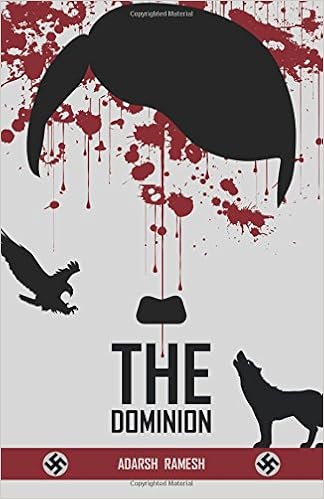
The Dominion sounds like an interesting novel on the outside. But once you start reading you find out how flawed this book is. There is no cohesion to the narrative. I cannot make head or tail of the story no matter how hard I try. The flawed language and grammar, and numerous typo errors, make the novel more difficult to comprehend because it's obfuscating the story. This made it all the more difficult to proceed with the book. The author said they took three years to write the book- but this is a very poor output. No cohesion of narration, no discernible plot structure, no pacing, no semblance of sanity in the story...made the book difficult to click with me. I can only proceed with a novel when it 'clicks' with me, interests and intrigues and invites me, in the first few pages. This book, alas, fails to do that. The author needs to go back to the drawing board and rehash their skills and their understanding of the basics of the craft.

Thank you.

Saturday, 2 July 2016

Review-Among the Stars- Dhasa Sathyan


Usually my reviews are long and detailed; but for this book I'll keep it relatively short and sweet. The author sent me a free copy in exchange for an honest review, so I owe him an honest review. This book is one of those you can delineate easily into the strong points and flaws, so I'll directly talk about that and try to be as lucid as possible.

First, the good points of the book:
1. The themes: In a scenario where the reader base in India is dangerously, and depressingly, tilted towards soppy, cold turkey romance novels, the author has made the right choice by opting to write a book of short stories about various human themes brought together under the umbrella of twisted, dark storylines ( another reason it clicked with me). From zombie horror to psychotic army men to psychedelic plants on mysterious deserted islands, the author has got the variety right and interesting.
2. Ideas have potential: The ideas are original and have potential, if explored properly, of making for mind-blowing stories.
3. Emotional intelligence: The stories speak of everyday human beings, our varying moods, shades and fantasies. Emotional intelligence in a book is important, at least for me, as a reader, to connect with it.

Flaws: As good is the idea of the book and its potential to shine, Among The Stars fails miserably in execution. And that's the sad part- to see books with great potential never realize their own capacity for greatness. Where it fails:
1. Language: Honestly, from the quality of writing, it's glaringly obvious that the author has had lack of practice- both in reading and writing. Too many big words and too much purple prose. A mistake many first-time writers make, seeking to impress by usage of complex words and phraseology. Wrong. The reader seeks the story, the context, something they can relate to first; and vocab second. You don't need complicated language to tell a great story and leave an impact- your writing becomes powerful when you string simple, lucid language together in an effective manner.
This needs practice. You need to read and read and read books till your mind resonates with words that coalesce into ideas. You need to write and get your work critiqued, then write more and more critique till you can pack those ideas cogently into power-packed prose. This is inevitable.
2. Grammar and quality of prose: Grammatical errors-basic ones- dot the landscape of the book, and take away from the stories. Add in the poor use of language and the prose becomes stilted and difficult to sift through. As a reader I'm being blocked because the author hasn't packed any flow into the prose. There's no finesse, and the prose is languid, lacklustre.
3. Poor editing: The editor can still take away some of the inadequacy by at least window dressing the work- especially in this case where the author lacks basic language skills and grammar skills. But where the editor disappear into on this one?
Will make a comment here, even though it's perhaps not my place to make it. Has the editing been ignored because the publisher is a vanity publishing house? Then I would advise the author to go with a traditional publisher next time, or hire a good editor if the publisher is a small or middle-level press. Editing IS important, no matter how much we are awestruck with Chetan Bhagat's bestselling status despite the horrible language and grammar and lack of editing.
It may take time, and numerous attempts, to find a good trad pub house- but in the mean time the author can hone his writing skills by reading a lot, writing a lot and getting his work critiqued by other writers in critique groups.

But do check the book out because it has some really original ideas in store: Among The Stars


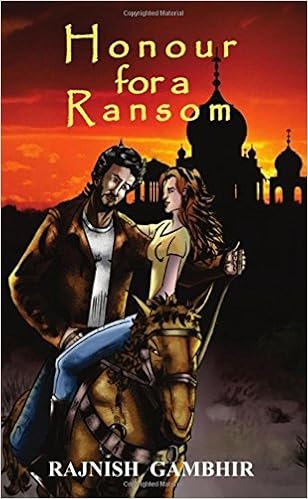
Review-Honor For A Ransom- Rajnish Gambhir


Blurb: "April 13th, 1978. Kartar Singh, an upper caste agriculturist, guns down his newly married daughter Simran and her lower caste husband, for the sake of 'upholding family honour'.His ex-lover, Sarah Jefferson (a British psychologist) visits him in jail to discover that Kartar has been a victim of ruthless manipulation at the hands of his politician father, Dilawar Singh, who is known to unconditionally despise the lower caste. Vowing justice for Kartar, Sarah embarks on an intriguing mission, venturing to turn the tables against the unscrupulous Dilawar, who by now is a powerful minister in the Punjab cabinet. Curiously delving into his boyhood days, she is astonished to learn that young Dilawar was in fact an 'affable-boy-next-door' who too had a love life, having lost his heart to a beautiful girl in Lahore... What then caused this drastic transformation in his attitude and personality? With the time fast running out, can Sarah succeed in nailing Dilawar as the chief culprit for the honour killings? Will she be able to reunite with Kartar - the only man she ever loved? A heartrending love story - Honour for a Ransom unfolds through the Jallianwala Bagh massacre, horrifying hazards of partition, romantic strolls by the Thames, and the unbending complexities of the rigid caste system." 


Honor For A Ransom is one of the most touching books I've ever read. No, it's not a faux-emotional tear jerker like the tripe dished out by crap-tastic writers like Ravinder Singh. 
This is, in the actual sense, an emotion-filled, high on context and brutally honest book about both the caste system in India, and honor killings- a construct of patriarchy wherein society tries to control women's bodies and sexuality by interfering in their choice of life partners, and deciding when they should marry and how they should have kids. This book also struck a cord with me because it exposes the hypocrisy, tyranny and misogyny of the arranged marriage system. 
In the first scene itself, Kartar Singh, a man who is an agriculturist and a gentle being whose nimble hands have lifted nothing more dangerous than a pen- that too to write profound poetry- murders his only daughter Simran and her 'lower caste' husband in cold blood. 
Post that, it's a gut-wrenching tale of the havoc that Dilawar Singh, Kartar's sociopath father, wrecks upon the entire family. 
Gambhir effortlessly straddles timelines to tell the story of three different generations- 1947 and Partition, when young Dilawar's life is torn apart by events that transform him into a sociopath and narcissist who will go to any lengths to get what he wants; Kartar's own love life with the British lady Sarah Jefferson and how it's destroyed by his father; and Simran's own love story with her husband and how it is brought to a brutal end. 
Dilawar is very well sketched as the sociopath; so is his elder daughter-in-law, Parminder. 
Kartar's life journey is portrayed evocatively...of a good man who lacks a backbone and ends up hurting the woman he loves; and how he's shattered after gunning down his Simmo and her husband, and the tragedy that follows, and how his father treats him like his puppet. 
Both Sarah and Simran have been sketched extremely well as strong, intelligent and independent women with a mind of their own and a will of iron. They're my kind of women.
Especially the relation between Sarah and Kartar has been written very well. 
The most poignant story is that of Kartar's invalid mother and alcoholic brother Nihal- the devastating effect Dilawar has on their lives is both outrageous and sad. 

Read this book, for it will make you think about both the individual and societal evil that is patriarchy; and the bane that is the caste system. And when both combine, they make for a decadent populace that cannot rise above its mediocrity. 
The language is very good and the grammar is perfect. The editing shines through. 

Anyone who enjoyed the movie NH10 will enjoy this book too. I'd say go for it; we need more books like this, well-written and high on emotional intelligence and context.

Grab your copy here: Honour For a Ransom 


Friday, 24 June 2016

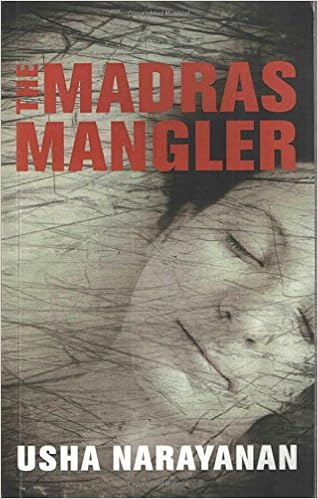
Review- The Madras Mangler by Usha Narayanan


First of all, it's rare to find a crime thriller written in India.
Second of all, it's even rarer to find a well written, well researched crime thriller.
Usha Narayanan's The Madras Mangler is one of those books.

The story revolves around five young women studying in Chennai's SS Padmaja college. Kat, Minx, Moti, Deepika and Lolita, five young, ambitious ladies who want to make something of their lives- something other than getting married, raring babies and serving their husbands like slaves as expected by the patriarchal society around them.

Usha's novel is loaded with subtext. She shows how patriarchy affects the girls' personal lives and their relations with their own families and boyfriends, it also depicts the misogyny and the violence against women rampant on the college campus and in Chennai as a city. It's like everywhere they go they're surrounded by miscreants who have the most perverted fantasies about women and violence against women is almost a ritual. This is how a lot of women in India feel, especially those trying to break the stranglehold of patriarchy and the glass ceiling as well. From the nerds who go around campus, openly making sexist comments and harassing girl students, to the misogynist Dean who espouses archaic attitudes towards women, to the cop who is as regressive and unconcerned with gender equity and other issues- we've seen and faced them all.
What I like is how the author has etched the women protagonists as not damsels in distress, but women who fight on their own level first and overcome difficulties, and even help each other out in time of need. Only and only when matters get a little out of hand do they take the adorable male lead Vir Pradyumna's help.
Vir himself is a lovable character, relying more on brains than brawn to get his work done; and he doesn't hit on the woman he likes, or make her feel low or other such tactics, to get her to go out with him. I like how he genuinely respects and helps the girls, like teaching them self-defence and asking them to be careful when they find the bodies in the Adyar river.

The serial killings, in themselves, bring out the patriarchy in sharp contrast: How such incidences are a way for regressive fringe groups to make sexist statements, and how women are advised to stay indoors and blamed if harmed, rather than being taught to be careful and stick up for themselves.

The background of murder and mayhem fits in well with the story and makes the plot delicious and the twists refreshing. The research in criminology has been done well, and Vir espouses the sharp criminologist with a human side very well. The suspense is nail-biting, the tension sustained till the end.
The climax is satisfying and great, an 'Aha' moment for a thriller buff like me.

Usha writes very well, her prose alive and taut, her language brilliant and her grammar perfect- this I suppose owing to her advanced degrees and proficiency in Literature and creative writing, and her solid background in advertising and teaching literature as well.
Usha writes like a pro, and if I may make a personal statement here: Her writing is of a very high level and this reflects in the fact that she has gone on to get published subsequently with Harlequin and Penguin Random House.
TMM is Usha's debut but she has outshined a lot of other English writers in India with this novel. She's a very intelligent and evocative writer as well, cutting through the crap to make an outstanding, articulate statement about gender inequity and societal apathy towards both women and people who're different.

I wish to read another nail-biting thriller from Usha, and wish her all the best for her future works across all genres she treads.

Go read The Madras Mangler if you want a good read with tea and fritters on a rainy evening. And a succor from the crass pop fiction being churned out as 'literature' today.

You can get a copy of this amazing novel here: The Madras Mangler

Thursday, 24 March 2016

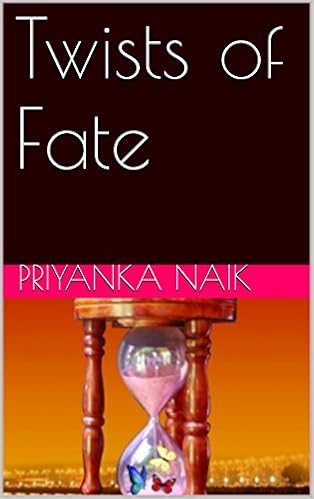
Review: Twists of Fate by Priyanka Naik


Blurb: As kids, we thought grown-ups had so much fun. How we wished we could grow up fast. If only we knew what we were wishing for.

Three pieces of a soul, they'd call themselves soul sisters and this is their journey, a journey through the lives of three best friends who accidentally reunite after a decade long disconnection. A round of startling revelations later, the three realize that life is indeed unpredictable. However, in this world of uncertainty, there is just one thing they can still be sure of their friendship! 

With secrets confessed, pain shared, tears shed and troubles discussed, they help find answers to each other's problems, just like old times. 

Each has a lesson to learn from the other, a story to tell, a reason to say 'I'm sorry' and a reason to say 'Thank you'. Has destiny brought them together to complete the picture? 

Will they succeed in finding the missing pieces? 
Can every twist of fate be interpreted in just one way? 

Join Sharvari Joshi, Parizaad Sethna and Nandini Mazumdar in a nostalgic journey from girlhood to womanhood. 'Twists of Fate' promises to be a roller coaster ride of emotions that will captivate the reader's heart and leave him pondering on life, fate and all its conspiracies. 


First of all, let me praise the author for not choosing the done-to-death mushy romance genre- one that makes me roll my eyes. Let me also congratulate the author for a fantastic debut. Writing a slice-of-life novel instead of the usual Durjoy-Ravinder-Nikita-Sudeep style is a bold choice; and getting the book right the first time signals talent and genuine effort. 

TOF is a slice-of-life novel about three girlfriends who grow up together in the megalopolis of Mumbai. Okay, I confess that I have a thing for novels centered around women characters. So that's the first thumbs up for TOF. 
I like the characters- rebellious, middle-class Sharvari who has ambitions beyond what most of her peers can even imagine. She's one of those liberalized, emancipated women who don't think marriage is the only meaning to their lives; who are strong, independent career women with an identity of their own. She's my kind of gal. Needless to say, I loved her father's supportive, liberal outlook and hated, vehemently, her mother's bigotr and neo-patriarchal outlook, and the way she discriminates between Neil and Sharvari and cares more about what society thinks than about how her daughter feels. Neil's character is okay- what a wuss. 
I loved both Parizaad and her mother- both women struggling to make it through life with a smile on their faces, both so positive and warm and decent and accomodating. I loved how Mrs. Sethna always called Nandini and Sharvari over to her cafe and fed them coffee and dessert. 
Nandini is also great- her body image and self-esteem issues have been captured very well. Since it's my personal experience, I can relate. Needless to say I didn't like her parents either.

One of the best things about the writing is the way the author captures conflict. That also shows how she has built complexity into her characters, as opposed to the one-dimensional cardboard cut-outs in contemporary romance novels. 
The conflict between Sharvari and her mother and sibling, and later on her spouse, is captured well. As is the way the relation between Parizaad and her mother changes. Nandini's heartbreak, and how she copes with a bad marriage and builds a new life as an independent woman is depicted well. 

The plot is good, and the author has maintained the timelines- from adolescence to middle age, very well. The pace of the story is maintained well and the tone is sustained- the author doesn't lose the rhythm for a second. The suspense is well-maintained and you want to keep turning the pages. This is not something all writers can handle. 

The prose flows well and is of high quality, the language is good and the grammar is perfect to the T. In a scenario where most 'authors' don't care to work on their language and grammatical skills, the author scores brownie points for being meticulous. 

My only problem with the book is the exposition built in between paragraphs- the philosophical ruminations. They signal authorial intrusion into the story and are redundant and jarring- and they take away from the story as well. If you must make a philosophical point, you do it through the characters or the events. They must be in between the lines- as subtext. Subtext is subtle.
 You do not insert sudden bouts of deep exposition in between the story. It's overt and irritating- the reader feels they're being preached to. 

To sum up, TOF is an important novel. This is writing that endures, this is writing that has subbstance and relevance. These are the kind of books that should be on bestseller lists- and not the incipient tripe dished out by Chetan Baba and his ilk. 

I wish the author all the best for her next book.

If you want a break from the tripe being dished out as 'Indian literature' and want to read a well-written novel with succint characters, go buy the book here: Twists of Fate

Monday, 14 March 2016

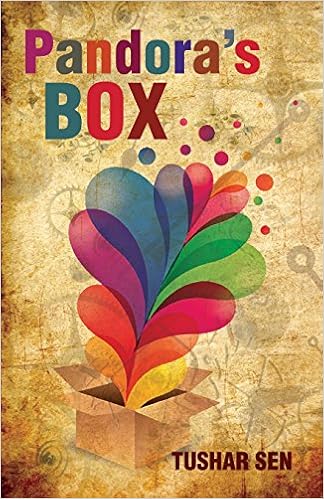
Review: Pandora's Box by Tushar Sen


Blurb: Pandora's box is a collection of tales that have woven reality and fiction together to serve to the reader spine chilling narratives and jaw dropping climaxes. most of the stories are inspired by real life incidents and characters – like saddam hussein's cia connection, the secret army of the indian prime minister, hitler's biggest mass murderer, strangest rains where frogs fell from the sky, heroism of mold of, terrorist funding in columbia, nasa's controversial moon landings and so on. some stories are inspired by characters around you who touch your lives in so many ways yet go unnoticed. some climaxes will urge you to read the story again with a new perspective. if imagination is more powerful than knowledge then here is a book that invites you to join the author in the most powerful imaginative endeavors you may have ever undertaken till now . . . in a literary environment of course. 

Tushar Sen's debut book is proof that Indian publishers must not be afraid to accept and nurture debutante short story writers. Kudos to Leadstart for taking on this writer with great potential. 
For, as I have learnt from experience, short stories are a great way to begin practicing and honing the craft of writing- they lubricate and expedite the writing process and mentally prepares a budding writer to undertake the writing of a novel- a much bigger and arduous project. 
Tushar Sen's short stories have two major aspects going for them: 
1. Themes: The themes in these stories range from domestic terrorism in India to how militant groups in Colombia are funded by multi-nationals to CIA to soldiers fighting in Siachen to the conspiracy theory about NASA's Apollo mission to talking about Hitler's most dangerous minion- Amon Goethe. I appreciate the range of the writer's imagination and the research he has done for his stories. 
2. Endings: The writer stays true to his words and has ended every story with an unexpected, jaw-dropping climax. This is a craft in storytelling that not many writers have. Most can write an interesting story, but few  can end it with a climax that is completely unexpected and shocking. 
This will help if the writer decides to go for a novel next. 
However, as a reader I have some issues with the editing. 
1. While the language is okay and the prose is of good quality, the use of big words, suddenly and often, in the wrong context, prove to be a jarring experience. What can be said in plain words should not be complicated unnecessarily. While the grammar is okay, the use of complicated words crammed in between lines of simple prose distract from the reading. At places punctuation is missing.
2. There is need to improve the sentence structure too. Sometimes sentences are too long, sometimes two sentences have been joined together, making the prose clunky. The latter is a problem that pervades throughout the book. Sentences should melt into one another, rather than being crammed together by a comma where not necessary. Each sentence presents a single line of thought or information, so we should be careful while clubbing two sentences together. 
Still, I would say that Sen's work is important in its very substance and deserves to be read for the sheer art of good storytelling at work here. I hope the writer goes ahead with publishing more short stories and novels on more disparate and intriguing themes. 
If you love good short stories with jaw-dropping climaxes, go buy this book here: Pandora's Box


Sunday, 6 March 2016

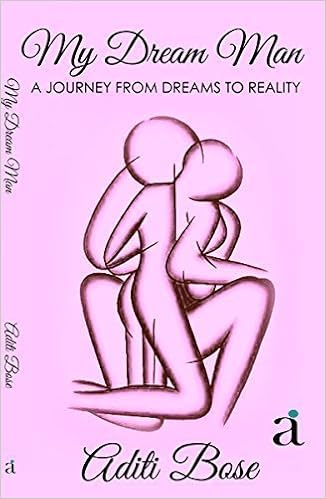
Review: My Dream Man by Aditi Bose


Blurb:  don't know if I can do a story like this once again or not. Ajopa Ganguly, a struggling writer, is reeling from the pains of her manuscript having been rejected by all publishers. She knows that making cupcakes and embroidering handkerchiefs is not her true calling. However, she is scared to write anymore and is losing focus. Aniket Verma, is the professor of economics who was also Ajopa's tuition teacher once. Despite their twelve years age gap, with time, they forge a special bond of friendship. Then a misunderstanding! Now Aniket is back and it feel just like old times. With a challenge of finishing a new manuscript in record time and a promise that he will help her to get it published if she does, he asks her to meet him at the publisher's office two days later. Does she write? Does she go to the publisher's office? At what moment does their friendship change? Do they fall in love? My Dream Man, a let-me-tell-my-friends and I-need-to-finish-this-now story, is an insightful examination of how forces beyond our control help us make decisions. As Ajopa says, it is all about 'deep choosing'


I think there is something to be said about the author's merit when you finish their book in one sitting.

Aditi Bose's second novel is like a breath of fresh air.

First of all, this is not like the mostly sub-standard, poorly written gooey romantic nonsense that is flooding the market these days.

Ajopa Ganguly is an excellent character. She's educated, liberated, independent and knows her self-worth. She's sassy, feisty and knows how to stand up for herself. She finds a goal and she goes ffor it.  She's not afraid to know and express her sexuality. She tries out different occupations even as she struggles with rejections from publishers for her manuscript.

I liked how, in Ajopa, Bose has etched a portrait of a modern, liberated, self-assured woman. She's not the horribly regressive sati-savitri types who bows down to a society still largely patriarchal except some liberated pockets. I like how she makes her own choices and sticks by them. I like how she's not dependent on a man for validation, and doesn't believe in living by what society expects of her. A woman who knows her mind.

I like how the author describes Ajopa's teenage pining for Aniket- an unconventional hero. And how that pining turns to true love later. Not all teenage relations are puppy-love driven, hormonal fleeting affairs.

That said, I also liked Aniket's character- such gallantry and sincerity, the way he protects Ajopa instead of taking advantage of her. I liked the scenes between Ajopa and Aniket- and some parts where she embarrasses herself in front of him made me laugh.

I also liked the character of Ajopa's father- liberal, supportive and understanding. If more women have fathers like him, society can actually see the true emancipation of the better half.

I liked the confident, original and eloquent  voice, the style and the crisp narration. The language is simple without being pedestrian and the prose flows quite well. The plot is crisp and well-done. The characters are complex and colorful.

There are no major issues with editing except a few typos here and there.

I have an issue with the cover though- it could have been better- more colorful. This one is a little off-color when compared to the lively, colorful story inside.

We need honest, original writers like Aditi Bose to fill the market with quality work.

I wish her all the best with her next book and hope that she will keep writing.

If you want a light, feel-good weekend read to go with your Sunday morning coffee, go buy this book here My Dream Man 

Wednesday, 2 March 2016

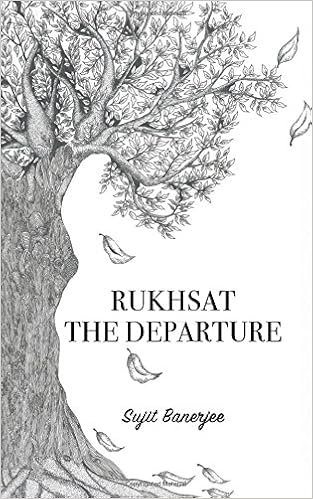
Review: Rukhsat The Departure- Sujit Banerjee


I think it is a major feat when a writer can compress an important message within a few pages of a short story. And Sujit has that ability- that rare talent to package a deep meaning within a short piece in an engaging manner. Short stories require a very careful development of plot and character. Incomplete character sketches or half-baked plots can prove off-putting.

But Banerjee's prose and skill has that rare quality of being able to say a lot in a few words. 26 stories based on the 26 alphabets of English. The writer covers everything- unrequited love, dementia in old age, unfulfilled longings, words left unsaid, feelings left unexpressed, depression caused by miscarriage, sexual abuse and incest, homosexuality, love and hate, how we humans being hurt each other, words and actions that rankle for years. The stories range from sad to dark to reflective, but each one packs a solid punch.

The editing could have been better, but to the writer's credit, the typos are minor and in no way takes away from the eloquence of the prose.

Fair warning, this is not for those who like mushy romance and 'light' frivolous stories with no redeeming values. These stories are deep and often dark, sometimes depressing. But the message is beautiful, and so is the close observation of human nature.

I think more writers should debut with short stories. It helps develop both writing skills and the craft of storytelling.

Go buy this book and read a piece of promising new writing.

This book is available here: Rukhsat The Departure


Wednesday, 3 February 2016

Review-Monkeys, Motorcycles, and Misadventures- Harsha


Blurb: "After having recurring dreams, a man considers retracing Lord Hanuman's epic journey from India to Sri Lanka. While rationality argues against the pursuit, the dream appeals to something deeper and he sets out with two friends on a 1200 kilometre trek across South India. The journey however, doesn't turn out to be quite what they expected. Along the way, through encounters with evil cans of pepper spray, wise men, pimps, hellhounds, and manic elephants, they are forced to confront their personal demons. At one of their lowest moments, plagued by doubt, they lose all hope. That's when they experience a sign, the first of many, which renews their spirits and helps them push forward. Monkeys, Motorcycles, and Misadventures, provides a candid account of the trio's incredible journey - their misgivings, sufferings, and triumphs, all in search of faith." 

A fun-filled travelogue, written with disarming candor and with liberal doses of humor, is hard to come b in India. When everybody else is writing college romances and trying desperately to become the next Duroy Dutta, Harsha has done a fabulous job by writing about something more relatable than dudes in India's premier institutes trying to get laid and get a job. 
The protagonist, a single, working male, undergoes upheavals, including the loss of a loved one, subsequent alcoholism and depression. So after he has what he considers a prophetic dream, he decides to set out on a pilgrimage of South India and Sri Lanka with his best buddies Sam and Sri. This is a real life humorous account of a journey the author himself undertook.

What follows is a hilarious account of faith regained and lost and regained again by the author and his friends. Their belief in God and Humanity is wavering and unpredictable, and their vacillations between theism and agnosticism are ridiculously funny. 
Also laughter-inducing is the banter, the arguments and the lectures the three friends give each other, replete with liberal amounts of cuss words. 
It is also as interesting, as the author describes staying in dirt, dingy hotel rooms with suspicious stains on the bed mattresses, following raids by the police. More than once, the author and his friends are mistaken for gay dudes having a threesome ( one of the major LOL moments). 

But the real ROFL moments are when they are joined on their journey by animals. Goats, monkeys, mad elephants and mood mongrels, who guide, scare and pillage from the three friends. 
Humor apart, this book also has a lot of info on what to do and what not do, what to watch out for and how to survive on a pilgrimage. Also, the author manages to narrate the mythical story behind ever temple and cave they visit. 

Except for a few typos, the language is of high quality and the grammar is perfect.

Anyone who fancies journeying through South India and experiencing religion, faith, mythology and architecture should read this book. Anyone looking for a humor filled travelogue should also read this book. 

You can buy a copy here: Monkeys, Motorcycles, and Misadventures